
Become an AI General Contractor.
An AI General Contractor is like a construction general contractor. They don't personally perform every trade — they understand the whole project well enough to discover, map, diagnose, design, scope, coordinate, and verify the work. YATSUR teaches you the method, gives you a real environment to practice in, and connects you to technical specialists when specialist engineering is required.
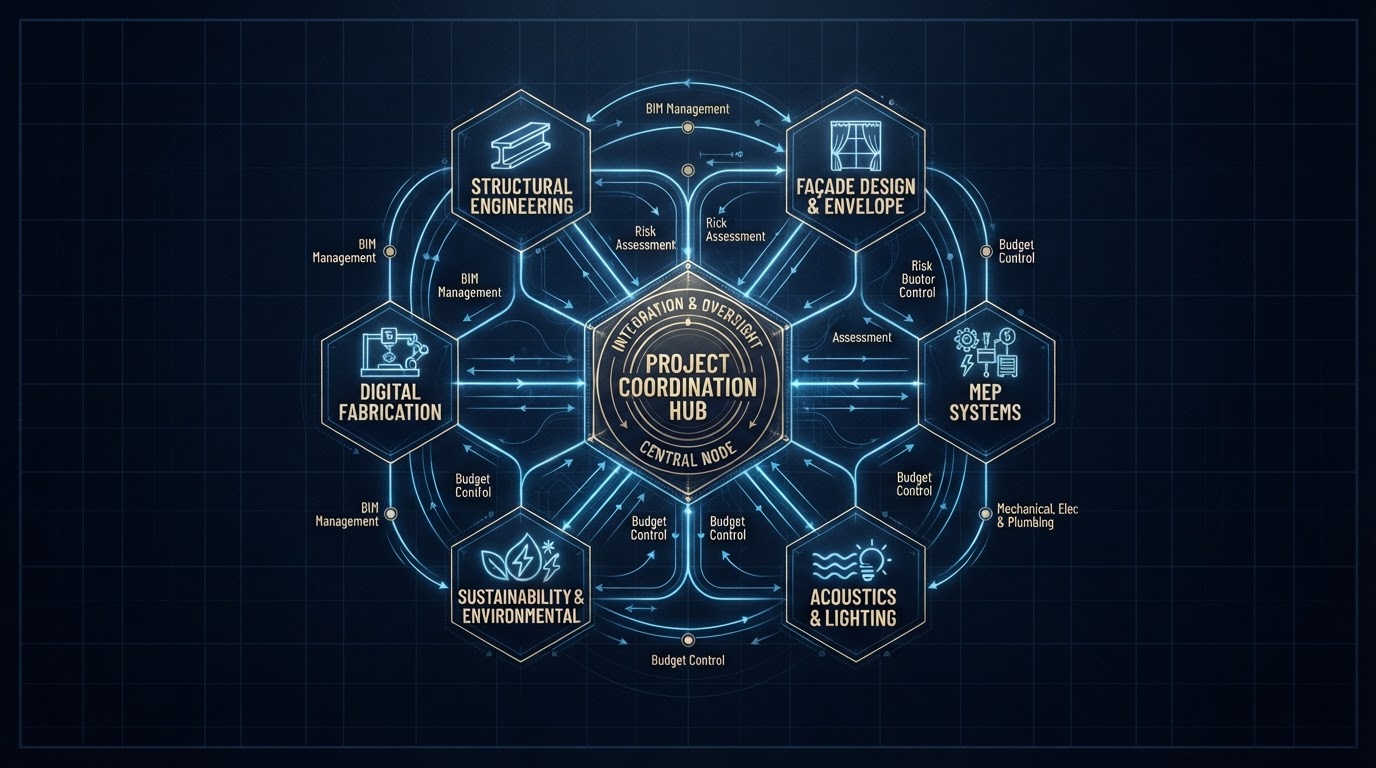
Someone Has to Understand Both Sides.
Business owners shouldn't need to know how every API, database, automation platform, AI model, and software stack works. Developers shouldn't need to become expert salespeople, process consultants, and account managers to do useful technical work. The Operator sits between those worlds.
Think General Contractor.
A general contractor does not personally perform every trade. They don't need to be the best electrician, plumber, framer, or roofer. Their value comes from understanding what is being built, what has to happen first, what depends on what, which specialist is needed, what good work looks like, what the customer expects, what happens when something goes wrong, and how all the pieces become one finished result. AI implementation increasingly needs the same kind of role.
What an Operator Does
- Discover what the business needs
- Map the current business and identify friction
- Decide what stays human, what's simplified, what's automated, where AI belongs
- Create the implementation blueprint
- Build simpler pieces themselves where appropriate, using frontier AI to assist
- Identify when specialist engineering is actually required
- Find appropriate specialists and obtain technical pricing
- Prepare the client-facing proposal and coordinate implementation
- Manage QA, launch, and remain accountable to the result
The goal is not knowing every technical detail. The goal is knowing enough to get the correct result.
You Need Technical Literacy — Not Every Line of Code.
The standard is not 'can you write every line of code?' The standard is 'can you understand the problem well enough to assemble, coordinate, and verify the right solution?' That's a different skill. And it's learnable.
What an Operator Does
An Operator is responsible for understanding the business problem and coordinating the solution — reconstructing operations, identifying the right interventions, and structuring implementation requirements.
Not an Instant AI Expert
We do not position Operators as instant AI experts. Technical specialists remain responsible for specialized implementation where needed. The Operator makes sure the right problem reaches the right expertise with the right context.
One Operating Sequence From First Conversation to Delivery.
Operator OS is where the engagement moves — not just where information sits. From the first lead through discovery, reconstruction, technical review, proposal, execution, QA, and ongoing support.
Discovery
Understand the company and the problem. What happens first? Then what? Who does it? Where does the information go? What changes the decision? How do you know the work is complete?
Reconstruction
Turn compressed descriptions into actual workflows. Map people, systems, decisions, dependencies, and exceptions.
Validation
Bring the reconstructed model back to the business. "Is this really how the company works?" Correct what is wrong and establish a shared version of reality.
Technical Review
Translate the business problem into something a specialist can evaluate — current state, desired state, systems, volume, constraints, exceptions, security, and success conditions.
Solution
Bring business and technical understanding together — feasibility, trade-offs, scope, dependencies, risk, and implementation sequence.
Proposal
Turn the solution into a commercial engagement — what's included, what isn't, what it costs, what the client must provide, and how success will be evaluated.
Execution
Coordinate the work, track dependencies, resolve blockers, control scope, and keep the client informed.
QA
Verify the system against the agreed result — not merely "the automation ran once" but "does the operating process work?"
Support
Monitor, maintain, and improve. Adapt as tools and business conditions change.
Your operating view is designed around what needs your attention — today's work, active opportunities, Business X-Rays, technical reviews, proposals, implementations, problems, follow-ups, invoices, and support. The system should answer: "What needs to happen next?"
AI Implementation Is Becoming Its Own Profession.
Businesses can increasingly access extraordinary technology. What remains difficult is implementation — understanding the company, finding the real problem, choosing the right intervention, scoping the work, coordinating specialists, managing expectations, delivering, testing, and supporting. That gap creates the opportunity.
The Scarce Resource
AI capability is becoming cheaper and widely available. Implementation experience is not. A person who completes fifty real projects learns things that cannot be downloaded from a model — and that experience compounds.
Build Assets That Compound
Client relationships, industry knowledge, implementation history, reusable workflows, technical partners, pricing knowledge, delivery data, and reputation. That becomes a business because the underlying assets become harder to reproduce over time.
Deliver, Don't Just Sell
Selling AI is easy. Delivering useful outcomes repeatedly is harder. That's the standard. The opportunity belongs to people who can deliver.
Learn the Method. Practice in a Real Environment. Graduate to Production.
YATSUR is not video-only education. You learn the method, practice it in a real Workspace, and graduate to production when you're ready. Three ways in — choose where you're starting.
Start here. Learn the YATSUR method — how to see a business as a system, reconstruct workflows, and decide where AI and automation actually belong. Includes the Field Manual, Community, a Training Workspace, a Training Snapshot, and 60 days of Workspace access.
Foundations is the entry point for everyone — learners, business owners who want to understand their own company, and future operators. You learn the core method: how attention becomes a lead, how a lead becomes a customer, how revenue is delivered, and where time, information, and opportunities leak. You classify every process into Keep / Simplify / Automate / AI-Assist / Rebuild — and you practice in a real Workspace, not just by watching videos.
No automatic monthly conversion. The 60-day Workspace period begins when your Workspace is verified ready. From here you can continue to the Self-Paced program, the Live Accelerator, or simply use what you learned to improve your own business.
The complete professional operator curriculum — not more videos, but the full structured capability program. Assignments, practical exercises, premium resources, Community, and 90 days of Workspace.
This is the complete operator capability program: business understanding, audit, mapping, human vs automation vs AI decisions, architecture, business systems, CRM, funnels, forms, workflows, communications, frontier AI-assisted implementation, sales, client acquisition, discovery, pricing, proposals, technical scoping, specialist sourcing, project management, QA, launch, support, and retention.
You do not need the Live Accelerator to obtain the essential curriculum. Live supplies application and judgment; the self-paced curriculum determines learning order.
The complete curriculum plus a recurring Weekly Live Implementation Lab — group Q&A, screen sharing, real system walkthroughs, business teardowns, architecture review, frontier AI-assisted building demonstrations, sales/pricing clinics, recordings, capstone, and the certification pathway. Six months Workspace and Community.
No mandatory synchronized cohort. The intellectual subject cycle rotates; the self-paced curriculum determines learning order; the Lab supplies application and judgment. You get recurring live implementation labs, group Q&A, screen sharing, real system walkthroughs, business teardowns, architecture review, frontier AI-assisted building demonstrations, troubleshooting, sales and pricing clinics, technical delegation, recordings, a capstone, and the certification pathway.
Already trained and just need the technical build? If you've identified a real implementation opportunity but need technical fulfillment, you can submit a client project to YATSUR for review — we evaluate the blueprint, determine the technical scope, and connect the required implementation resources.
Training Workspace, Then Production Graduation.
YATSUR is not video-only education. Students receive a real practical environment when their package includes Workspace access — contacts, leads, pipelines, forms, calendars, workflows, websites, funnels, conversations, follow-up, reporting, and the customer lifecycle.
Training Workspace
Practice in a real environment with a Training Snapshot — a preconfigured practice system. Learn by doing, not just by watching. Foundations includes 60 days; Self-Paced includes 90 days; Live includes six months.
Production Graduation
When you're ready to move from practice to real business use, you can graduate to a client-owned environment, an operator-owned professional environment, or YATSUR-managed fulfillment. Your learner work is protected during migration.
Operators Don't Have to Be Expert Developers.
Operators do not have to pretend to be expert developers. Technical specialists do not have to become full salespeople or process consultants. YATSUR creates the structured bridge — the Operator scopes the work, the Technical Network supplies the specialist capability.
A Business Operating System, Ready to Use.
Participating Operators may receive access to business infrastructure supporting the work of running and coordinating client operations.
Disclosure: Operator OS uses third-party CRM infrastructure to provide portions of its business operating system. That platform is a third-party software product. Operator OS is the product and methodology; the CRM is infrastructure.
Talk to YATSUR's AI Voice Agent.
Call to ask about the Operator path, see whether it's a fit, and get routed to the right next step.
The voice agent is an informational assistant and lead router. It does not make technical promises or guarantee acceptance into any program.
Coordinate Business and AI.
Learn the methodology, use the infrastructure, and become the layer between business problems and technical implementation.
Book a Call or Send a Message.
Curious whether the Operator path is right for you? Enter your details once, then book a discovery time or send a message.
Your details and message go to our system with the right tags when you confirm a time. No separate form — booking and messaging happen together.
November 2026
Times shown in your local timezone (UTC).